Does your dog eat too fast? The dangers of fast eating (and how to stop it)

In this article
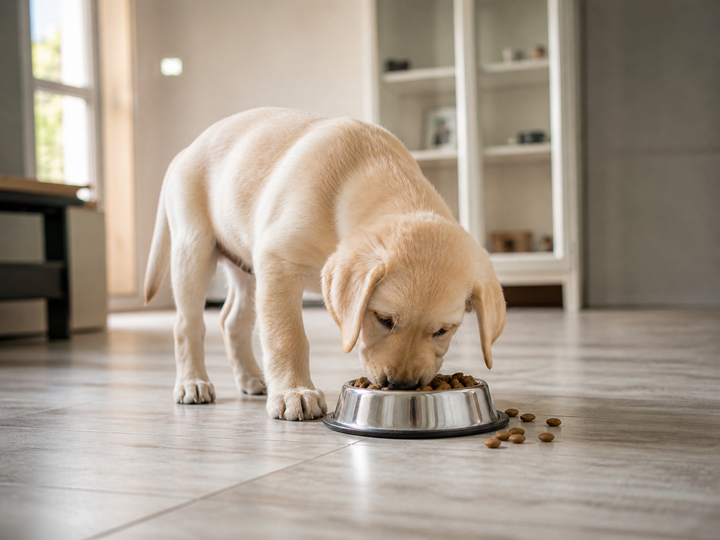
You fill your pet's bowl, turn around to grab your coffee, and by the time you look back… it’s gone.
If this sounds familiar, you likely have an "enthusiastic eater." While it might seem funny, or even like a compliment to your chef skills, speed-eating is actually a risky habit.
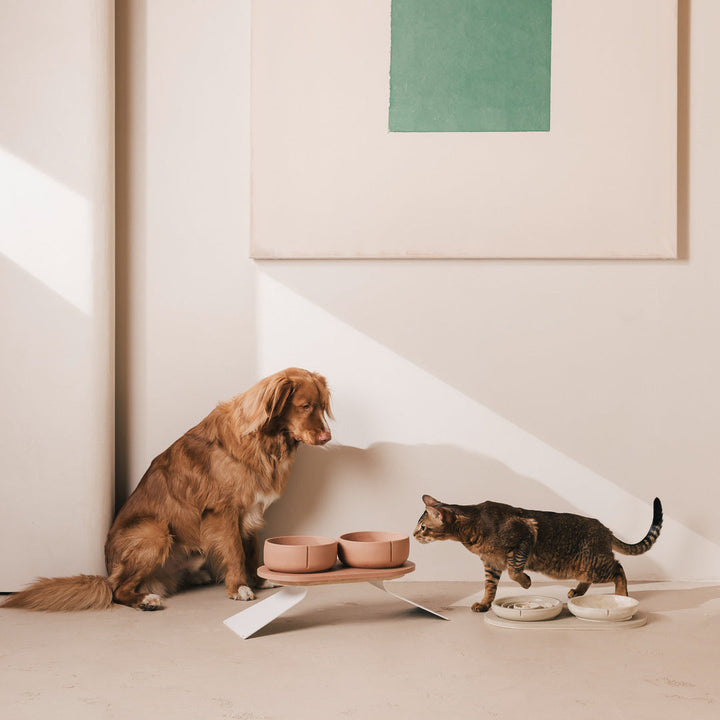
In the veterinary world, this rapid consumption is often called the "Scarf and Barf" cycle. It happens when pets (both dogs and cats) gulp down their meals without chewing, swallowing large amounts of air in the process. This isn't just about bad manners; it's a physiological mismatch between your dog's ancestral instincts and their modern lifestyle.
At PINO, we believe that the way they eat directly impacts their well-being, health, and happiness. Here is why slowing down is essential for your pet, and how you can turn a 10-second gulp into a calm, 10-minute dining experience.
The Hidden Dangers of Eating Too Fast
It is not just about the mess. When a pet eats too quickly, they bypass the first essential stage of digestion: chewing (mastication). This can lead to three major health issues:
1. The "Scarf and Barf" Effect
When kibble hits the stomach too fast, the body often rejects it. This leads to immediate regurgitation, the passive expulsion of undigested food, or active vomiting after meals. The stomach simply cannot expand fast enough to accommodate the sudden volume, triggering a rejection reflex. It is uncomfortable for them, and messy for you.
2. Poor Digestion & Weight Gain (The Satiety Gap)
It takes time for the stomach to signal the brain that it is full. Key satiety hormones like Cholecystokinin (CCK) take several minutes to release after food enters the small intestine. Eager eaters often bypass this signal because they finish eating before the hormones are released. This leads them to feel hungry even when full, causing begging and overeating. By slowing them down, you allow the "I'm full" signal to catch up with the meal, improving digestion and helping prevent unnecessary weight gain.
3. Gastric Issues (Bloat and GDV)
Swallowing air (aerophagia) along with food causes gas and discomfort. In severe cases, particularly for larger dog breeds like Great Danes or Shepherds, this gas accumulation can contribute to Gastric Dilatation-Volvulus (GDV), a life-threatening condition where the stomach twists. Studies show that rapid eating is a significant risk factor for GDV. Reducing the speed of eating and the amount of swallowed air is a critical preventative step.
Why Do They Do It?
For many pets, it is instinct. In the wild, eating fast meant survival, getting the calories before a packmate stole them. For others, it is simply excitement or competition with other pets in the house. But just because it is natural doesn't mean it is healthy in a home environment where food is guaranteed.
We believe pets deserve the same quality dining experience as humans. You wouldn't enjoy a meal if you had to inhale it in seconds, and neither does your pet, even if they think they do!

The Solution: Make Them Work for It
The most effective way to stop speed eating is to introduce mental stimulation. By turning mealtime into a mild challenge, you force your pet to use their brain and their tongue to navigate around obstacles. This engages their "foraging" instinct, which releases calming endorphins.
This is where the right bowl makes all the difference.
Meet the PINO Slow Feeder Bowl
We noticed that most "slow feeders" on the market were mass-produced plastic trays that slid across the floor, frustrating the dog and ruining the interior of the home. Plastic also harbors bacteria in microscopic scratches, creating hygiene risks.
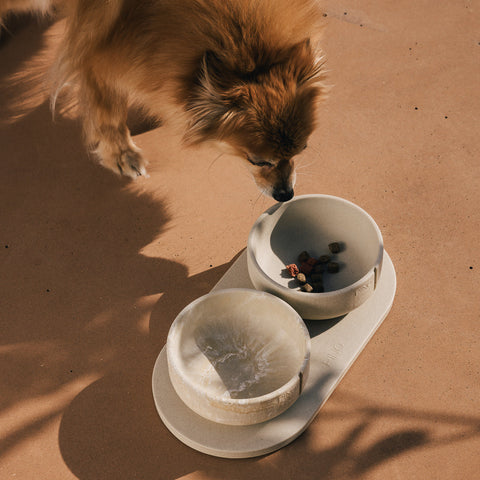
So, we designed the PINO Slow Feeder Bowl, a solution that balances medical necessity with handmade Belgian craftsmanship.
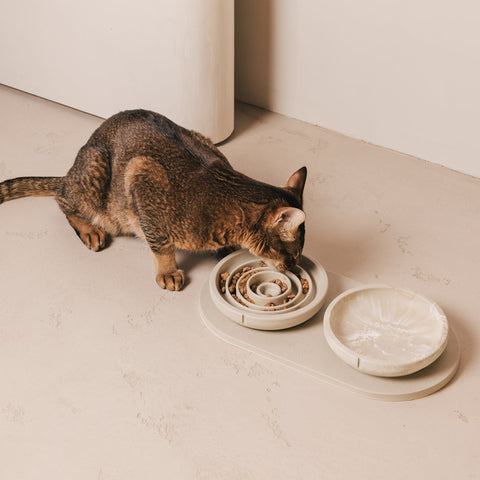
- Designed for Digestion: The interior obstacles are carefully spaced to prevent gulping. This encourages your pet to eat around the barriers, naturally slowing their pace and preventing the dreaded "scarf and barf". It forces the transition from "gulping" to "licking," which is naturally soothing.
- Strong as Stone: Unlike lightweight plastic bowls that your dog chases across the kitchen (increasing their excitement and speed), our bowls are made from PINO Sandstone®. This material provides natural weight (up to 1.75kg) and stability, ensuring the bowl stays put while your enthusiastic eater works for their food.
- Hygiene First: The nicks and crannies of plastic slow feeders can harbor dangerous biofilms of bacteria like E. coli. PINO Sandstone® is non-porous, so it doesn't hold on to smells and is easy to keep clean. It contains no BPA, phthalates or lead.
- A Moment of Calm: By extending mealtime, you reduce your pet’s stress and provide them with a mental workout that leaves them feeling more satisfied and relaxed after eating.

Ready to Break the Habit?
We love our four-legged friends not in spite of their quirks, but because of them. Whether you have a greedy Labrador or a fast-snacking feline, they deserve a meal that nourishes them safely.
Transform mealtime from a race into a ritual.
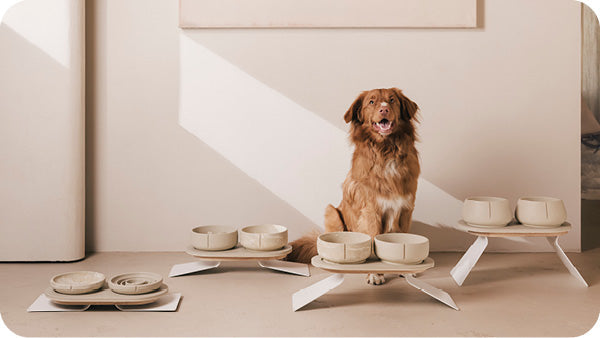
👉 Our Slow Feeder Bowl is available in 3 sizes and 3 colors, suitable for every dog.