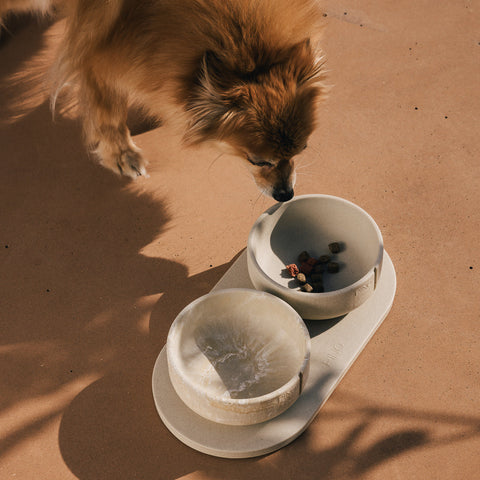
My puppy gulps: why does your puppy eat so fast and what can you do about it?

In this article
You put the food bowl down, and before you can even stand up properly, it is empty. No chewing, no pause, no breathing room. Your pup wolfs down his kibble as if someone could snatch it away at any moment.
Cute? Maybe the first time.
Healthy? Not really.
Many puppies eat too fast. That behavior seems harmless, but it can cause discomfort such as swallowing air, flatulence, stomach pain, vomiting, or an overloaded digestive system. Fortunately, as an owner, you can do a lot to encourage your pup to eat more slowly.
In this article, you will read why pups gulp, when to pay attention, and how to make mealtimes more comfortable.
Why does my pup gulp?
Gulping behavior often develops at a young age. In the litter, pups sometimes eat together from the same bowl. Those who eat slowly get less. As a result, some pups learn very early on: eating fast is eating safely.
Also, when there are multiple dogs or pets in the house, your pup may get the feeling that he has to defend his food. Even if no one touches his bowl, that excitement can be enough to make him eat faster.
Other pups simply gulp out of enthusiasm. For them, eating is the moment of the day. The bowl is lowered, the tail goes up, and all inhibitions are gone.
Common causes of gulping in pups include:
- competition in the litter
- multiple animals in the house
- fear that food will be taken away
- too much excitement before mealtime
- kibble that is too small and easily swallowed
- too long a time between meals
- habitual behavior that quickly sticks
Important: your pup is not doing this “wrong.” He is following an instinct. But that does not mean you should let it happen.
Is gulping dangerous for a pup?
A pup that eats quickly occasionally does not necessarily have a problem. But when your puppy gulps down every meal, it is wise to intervene.
When gulping, your pup chews less thoroughly. Large pieces of food reach the stomach faster, forcing the digestive system to work harder. Additionally, your puppy often swallows a lot of air. This can cause burping, flatulence, bloating, or stomach pain.
Possible consequences of gulping down food include:
- less proper chewing
- swallowing more air
- flatulence
- stomach pain or a bloated stomach
- vomiting after eating
- appearing hungry again sooner
- increased risk of overeating
- extra strain on the digestive system
With large dog breeds, there are also frequent warnings about gastric torsion or twisting. This is a serious condition requiring prompt action. Not every dog that gulps down food will experience this, but eating slowly is a sensible habit to teach from a young age.
Are you in doubt because your puppy vomits often, seems to be in pain, remains extremely greedy, or develops a swollen belly? Then contact your veterinarian.
How do you teach a puppy to eat more slowly?
Completely “breaking the habit” of gulping is difficult. It is often instinctive behavior. However, you can adjust the eating environment and the way you feed your puppy so that he automatically eats more slowly.
1. Feed your puppy in a quiet place
Calmness begins before the first bite.
Place the food bowl in a spot where your puppy will not be disturbed. No other dog watching. No children walking around the bowl. No hustle and bustle in the kitchen.
If your puppy feels that his food is safe, he will have less need to rush.
With multiple dogs, it is best to give each dog its own eating spot. This reduces competition and prevents eating from becoming a stressful moment.
2. Do not let your puppy eat in full excitement
Has your puppy just returned from rough play? Then his body is still "on." He is enthusiastic, may still be panting, and will rush to his food faster.
Let your puppy calm down for a moment before you give him his meal. Calmness is also important after eating. Avoid rough play, jumping, or running immediately after the meal.
A good mealtime is not a race. It is a break.
3. Divide the meal into smaller portions
Some puppies gobble their food because they start their meal too hungry. In that case, it can help to divide the daily amount of food into several smaller portions.
Your puppy won't get more food, but rather a quieter moment more often. This can help reduce the pressure of "eating it all right now."
Always follow the feeding advice on the packaging or the advice of your veterinarian.
4. Look at the size of the kibble
Kibble that is too small disappears easily without chewing. Especially with larger puppies, this can reinforce gobbling.
Kibble that suits your puppy's size and age encourages better chewing behavior. However, be careful: do not change food abruptly. A young digestive system is sensitive. Always introduce a new food gradually.
5. Turn mealtime into a search moment
You can spread some of the kibble over a sniffing mat, in the grass, or in a safe spot in the house. This way, your puppy has to search instead of just grabbing.
This not only slows down eating but also provides mental stimulation. For many puppies, this is a nice way to burn off energy without putting extra strain on their young bodies.
However, be careful with slippery floors or unhygienic areas. It should encourage slow eating, not become messy or unsafe.
6. Use food toys or a food puzzle
A food ball, food puzzle, or other food toy can help release kibble in a controlled manner. Your puppy has to work for his food and cannot gobble it all down at once.
This works especially well for puppies who like to be active. Always choose toys that suit your puppy's size, age, and biting strength. Do not leave your puppy alone with them in the beginning.
7. Use a slow feeder bowl
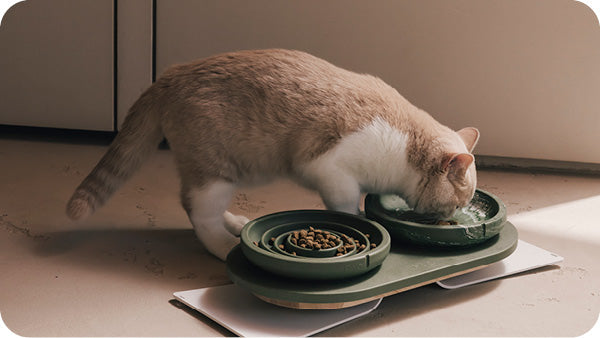
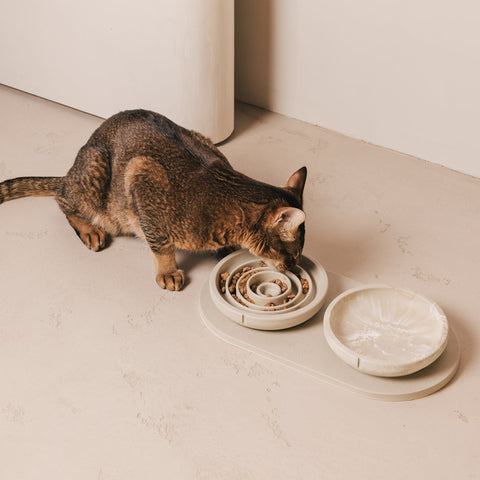
A slow feeder bowl is one of the easiest ways to get your puppy to eat more slowly. Due to the shape, ridges, or obstacles in the bowl, your puppy cannot take all of his food in one big gulp. He has to eat around the shapes and automatically takes smaller bites. As a result, the meal takes longer, giving your puppy more time to chew, breathe, and feel when he has had enough.
For puppies who gulp down their food as if it were a competition, this can make a big difference.
Why a good slow feeder bowl is more than just a trick
Many people view a slow feeder bowl as a handy tool. And it is. But actually, it is about more than just “eating more slowly.”
It is about comfortable eating.
A good food bowl helps your puppy start his meal more calmly. He stays in place better, slides less across the floor, and does not turn eating into a battle between nose, paws, and bowl. That is why PINO develops bowls that are not only beautiful but are also tailored to how dogs really eat. Our slow feeder bowls are designed to slow down the eating pace without making mealtime frustrating.
Because a puppy shouldn't have to fight with his food bowl. He should simply be able to eat in peace.
When is the best time to choose a slow feeder bowl for your puppy?
A slow feeder bowl is beneficial when your puppy:
- eats his meal in a matter of seconds
- hardly chews
- often swallows air while eating
- burps or is gassy after eating
- sometimes vomits after a meal
- becomes restless as soon as the food bowl appears
- sees other animals in the house as competition
- pushes kibble across the floor while eating
Do not wait until gulping becomes a fixed habit. The sooner you teach your puppy to eat more slowly, the more normal that eating pace becomes.
What should you not do?
Some solutions seem logical, but are not always ideal. Do not put your puppy under pressure while eating. Do not hover over him, do not correct him constantly, and do not simply take his bowl away to “teach him to wait.” That can actually create more tension around mealtime.
Placing a random heavy object in the food bowl is also not always safe. Your puppy could hurt himself, try to pick up the object, or become frustrated.
It is better to choose a solution designed for this purpose: a quiet eating area, appropriate portion sizes, food puzzles, or a sturdy slow feeder bowl.
Conclusion: gulping is not a character trait, but an eating habit
A puppy that gulps is not “badly trained.” Often, the behavior stems from instinct, habit, or enthusiasm. However, if your puppy eats too fast, it is important to take it seriously.
Eating more slowly helps your puppy chew better, swallow less air, and digest more comfortably. Start with a quiet feeding area, divide meals if necessary, and choose a feeding solution that helps your puppy slow down.
A good slow feeder bowl makes the difference not by working against your puppy, but by guiding him toward a calmer eating rhythm.
Because good eating doesn't just start with what is in the bowl.
It also starts with the bowl itself.