My dog or cat won’t eat anymore. What should I do?

In this article
For our pets, eating is more than just nourishment: it’s comfort, security, and routine. So if your dog or cat suddenly eats less or stops eating altogether, it’s only natural that this would alarm you as a pet owner.
But there’s no need to panic. There are many possible causes, and fortunately, many ways to solve this problem.
1. Medical causes: consult your veterinarian
As a first step, it’s important to rule out medical issues.
- Toothache is a common cause. Dogs and cats with inflamed or broken teeth often refuse their food. Watch for signs such as drooling, chewing on one side, or even growling when their mouth is touched.
- Allergies or stomach issues can also lead to a decreased appetite. Look for signs like itching, diarrhea, or vomiting.
“A healthy dog starts with a healthy mouth. It’s a classic saying in veterinary medicine.”
Lobke Simoen, Dasivet Veterinarians
2. The environment: often overlooked, but super important!
It’s not just the body; the place where your dog or cat eats also has an impact.
- Peace and quiet are essential. Busy areas, children running by, or other animals nearby can cause stress.
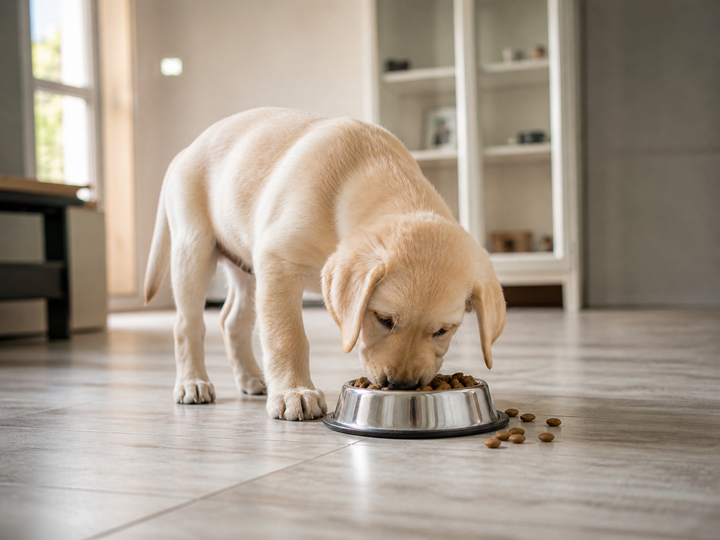
- Fear of noise from metal bowls. Many dogs refuse to eat from stainless steel bowls because of the clanging sound or their own reflection. They find it scary or unpleasant, without you even noticing.
“I’ve gotten several dogs to eat again simply by replacing the bowl.”
Lobke Simoen, Dasivet Veterinarians
3. Comfort: height, posture and material
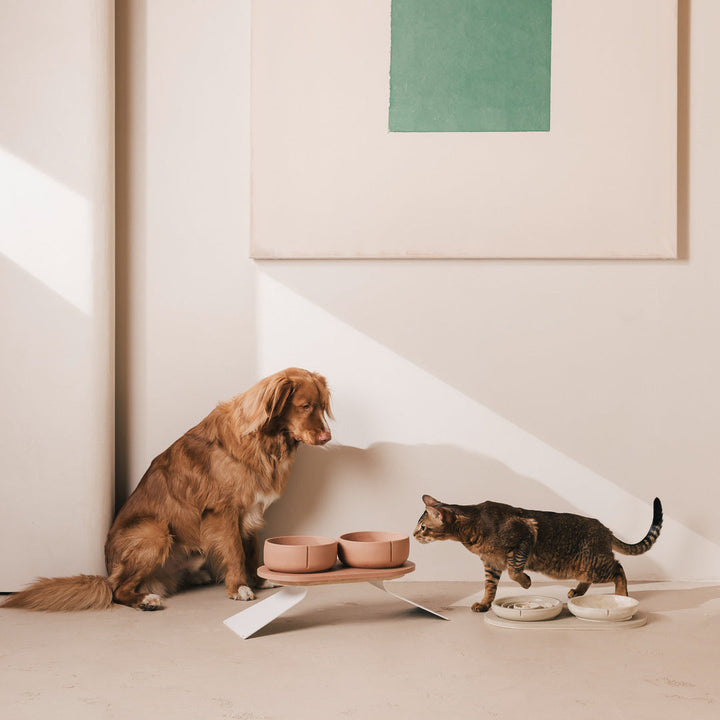
Every animal eats differently. Some benefit from a raised bowl, while others do better with a lower position, especially if they have joint pain or mobility issues.
- Dogs with neck or elbow problems often eat better from a raised bowl.
- Dogs with hip problems sometimes actually benefit from a lower position.
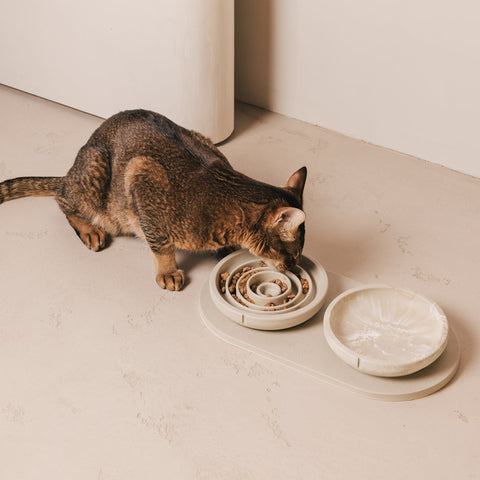
- Cats, on the other hand, prefer low, shallow bowls to protect their sensitive whiskers.
4. What can you do as a pet owner?
- Consult your veterinarian if in doubt
- Observe the feeding area: is it quiet? Comfortable?
- Replace that rattling metal bowl
- Experiment with height and shape
At PINO, we believe that a good food bowl is not just an accessory. It is a tool to help your pet eat comfortably, safely, and relaxed.
Our bowls are:
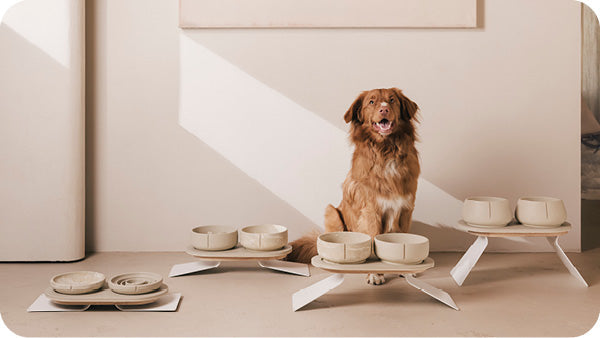
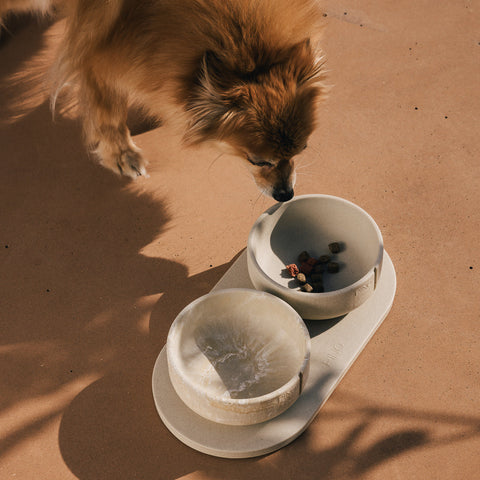
- Made from heavy, odorless PINO Sandstone®
- Quiet, sturdy and hypoallergenic
- Designed for specific needs: raised, lowered, for long ears, whisker friendly, slow feeders and more
“It may seem small, but a different bowl can literally help your pet eat again.”
🐶 Want to know which bowl your pet needs?
👉 Take the quiz or discover our selection.